Shifting Winds: Fighting Air Pollution in South Korea
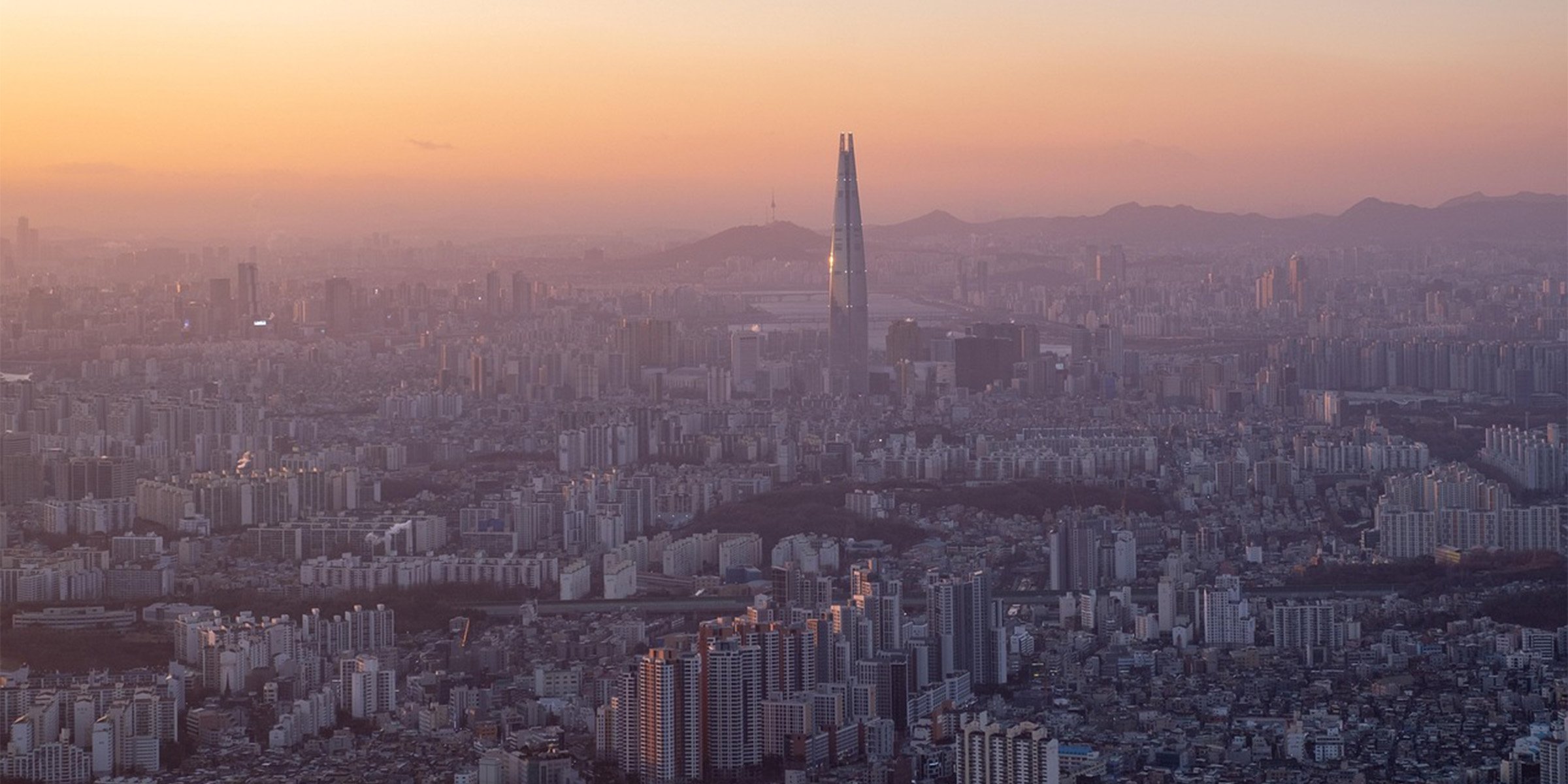
South Korea, with its sprawling Seoul metropolitan area, mountainous geography, traffic congestion, and factory emissions, faces the same challenges every other urbanised area does: pollution, and lots of it. The country’s mountainous topography traps pollutants in basin areas like Seoul, restricting the ability of contaminants to mix vertically, and increasing their concentration closer to the ground.
On top of this, fine yellow dust from the Gobi Desert, a mix of desert dust and industrial toxins known in Korean as Hwang Sa, blows into the country frequently, resulting in itchy eyes, respiratory issues, and other health challenges. Seoul recorded 19 yellow dust days in 2023. This is not the only source of smog and haze across South Korea. 52% of fine dust at Olympic Park was found to originate from South Korean domestic factories, according to a joint Korean-U.S. study.
The South Korean National Institute of Health found in a 2015 study that outdoor air pollution accounted for over 12,000 hospitalised cases of respiratory disease in 2010 and concluded that public health and policy changes can prevent 57.9% of air-pollution-related deaths. Moreover, acid rain, caused by rain droplets mixing with air pollutants, results in more than $5.5 billion worth of damage to the South Korean economy per year, according to a 2022 study.
The primary culprit? PM2.5, pollutant particles 2.5 microns or less in diameter that can contain toxins like arsenic or lead. A Berkeley Earth study found that breathing air with 22 micrograms of PM2.5 per cubic meter over 24 hours is the personal health equivalent of smoking one cigarette. Desertification of the Gobi, which overtakes over 2,000 square kilometers of grassland annually, alongside rapid industrialisation across East Asia continues to exacerbate yellow dust and PM2.5 levels. However, this is by no means a new phenomenon, with writings dating back to 174 AD of the Silla Era referring to “muddy rain.”
The cultural impact of air pollution on South Korea is not to be understated. In 2017, Seoul launched free air purifier distribution for children and seniors. Similar eco-friendly boiler distribution campaigns have also been launched across South Korea. Koreans don umbrellas at the slightest hint of rain, due to the widespread belief that acid rain causes balding and negative health effects. Checking air quality is as much a regular habit as checking the weather forecast. Simply type 미세먼지 on Naver to see a map of existing air quality levels across the peninsula.
Yet, hope is not lost. Over the last 18 years, the Korean government has launched substantial investments in air quality management, totalling $9 billion, including eco-friendly boiler regulations, vehicle restrictions, and electrifying buses and public transport fleets. Accordingly, pre-mature deaths due to air pollution have fallen since 2006.
In 2023, South Korea launched its climate action plan, pledging to reduce total national GHG emissions by 40% by 2030 (compared to 2018 levels). Ongoing mandated municipal-level and national-level climate adaptation and action planning continue to strategize and reorient public policy for GHG emissions reduction every five years, a frequency much more regular than that of many other OECD nations. Yet South Korean policy is not without criticism, with many believing the nation is not acting aggressively or quickly enough to address the climate crisis, or critiquing the feasibility of ambitious goal targets that may lack achievable milestones. Current climate policy, while forward-moving, still falls short of the Paris Climate Accords’ commitments and standards.
This leads us to the present, with South Korea announcing on November 17, 2025, the decision to eliminate thermal coal power by 2040. This pledge will close all 62 of the nation’s coal plants over the next 15 years. While 40 of the coal power plants already received closure dates, the fate of the remaining 22 plants is now sealed. This is no small feat—it currently accounts for 30% of South Korea’s power supply.
Alongside coal reduction, the South Korean government offers financial incentives for scrapping diesel vehicles, and has tightened industrial emissions regulations and caps. Transnationally, China, South Korea, and Japan have launched their Tripartite Joint Action Plan for 2026-2030 to focus on collective and cooperative air quality mitigation efforts.
As a result of these past fifteen years of emissions-reducing policies and incentives, fine dust concentrations fell by 45.2% across the Northeastern Asian regions in 2024. While the battle for clean air, and a cleaner world is far from over, South Korea stands at a crossroads, juggling climate action and the public health consequences of a smog-filled society with the real-world feasibility of shifting a globalised, coal-powered economy into a greener future.
Edited by Sandy Ou
2. https://www.koreaherald.com/article/10623397
3. https://www.koreatimes.co.kr/southkorea/society/20170719/52-of-fine-dust-generated-in-korea
4. Crawford, J. H., et al. KORUS-AQ Final Science Synthesis Report. NASA Earth Science Project Office, 2016. (mdpi.com)
5. https://pmc.ncbi.nlm.nih.gov/articles/PMC4392455/
6. PARK, JUNGAN and Hong, Eugene and Chung, Andrew, Effect of Fine Dust on the Acidity of Acid Rain in South Korea. Available at SSRN: https://ssrn.com/abstract=4217669 or http://dx.doi.org/10.2139/ssrn.4217669