
The Latest Food Trend Sweeping South Korea: Dubai Chewy Cookies
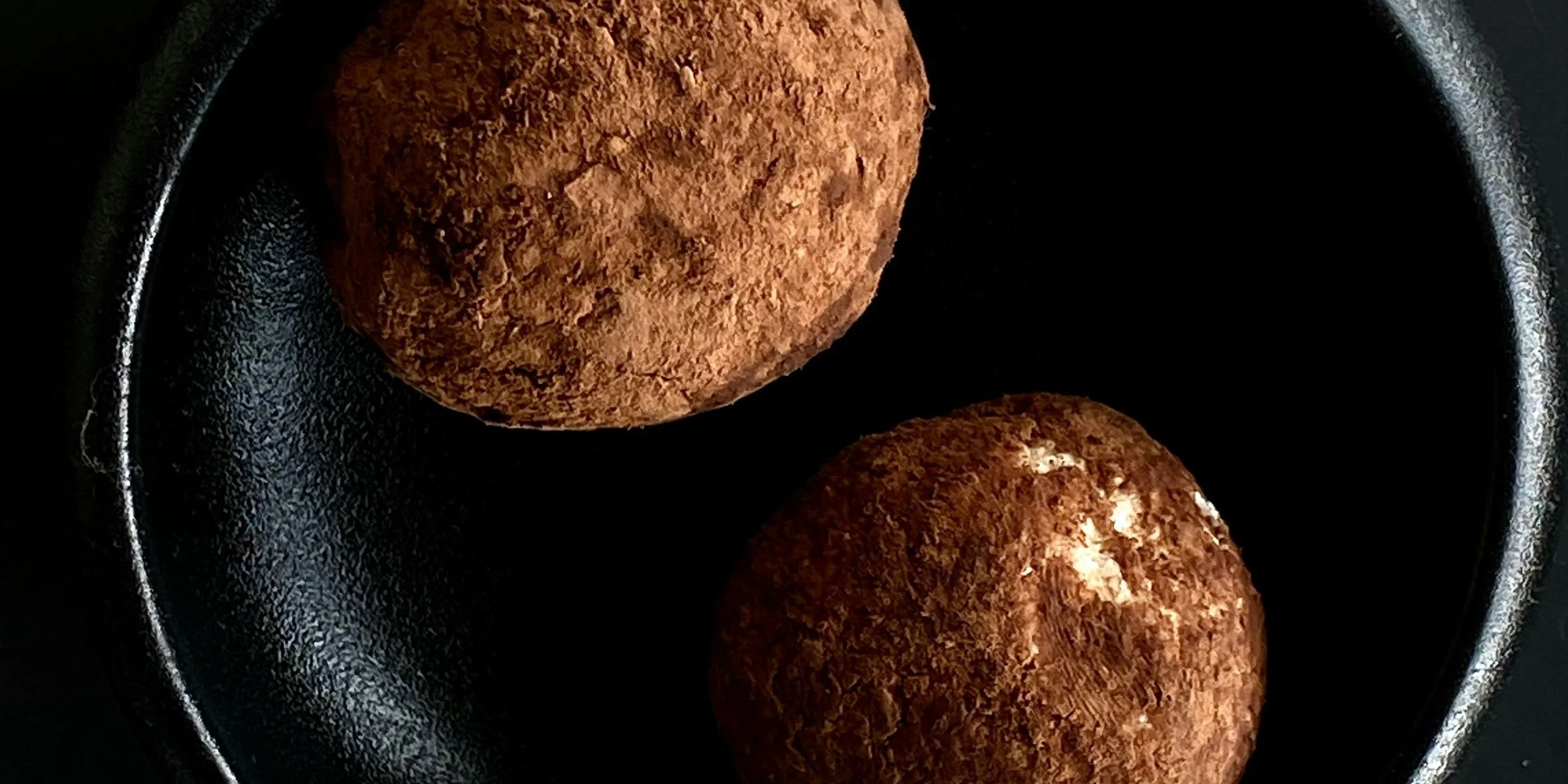
Photo by Filipp Romanovski on Unsplash
As ubiquitous in the past year as matcha or Labubus, the sky-high Dubai chocolate trend seemed to be falling from grace as the domineering food trend of 2025. A mix of crispy kadayif (chopped filo pastry) and pistachio-tahini based cream filling stuffed into a chocolate bar, Dubai chocolate’s hype knew no bounds, causing a global pistachio shortage at its peak. Yet, while the trend cycle continues to churn, South Korea seems to be giving Dubai chocolate a second wind—repurposed in a chocolate marshmallow, chewy cookie that’s flying off the shelves.
The dujjonku (abbreviation of Dubai chewy cookie) riffs off the Dubai chocolate bars by enveloping the kadayif pistachio filling in a chocolate marshmallow covering. About the size of a small egg, the cookie is then generously dusted in cocoa powder. When pulled open, the gooey charm of pistachio cream and crunchy kadayif is nothing short of delectable and ripe for social media, reminiscent of the once trendy rainbow grilled cheese pulls of the 2010s. While more of a stuffed marshmallow dessert than a doughy cookie, the trend has exploded across South Korea, with searches for the dessert climbing on food delivery apps by 1500 times in the last month.
Not too sweet, not too creamy, crunchy, chewy, or messy, the cookie riffs off of everything that worked for Dubai chocolate to begin with—the texture of kadayif with a creamy, sweet, pistachio-chocolate counterbalance. Originally developed by Mond Cookie’s Lee Yoonmin and pastry chef Kim Nari in April 2025, the product began receiving considerable attention from the public after IVE’s Jang Wonyoung posted the treat on her Instagram story in September. Now, by January, convenience store chain CU reports over 1.8 million cookies sold. The most die-hard cookie hunters reference an app that tracks the cookies’ retail locations across South Korea, with real-time updates on stock and availability.
The cookie is but one in a series of bite-sized Korean food trends over the last five years: from tanghulu, dalgona, ex-boyfriend toast, or salt bread, all costing a couple thousand won and making for a trendy, bite-sized, affordable sweet treat. Even the most steeply-priced cookies will run you about 10,000 KRW, or about $7 USD. Expensive for a cookie? Yes, but when it’s obtainable and instantly, deliciously gratifiable, the South Korean (cookie) consumer is clearly willing to make an exception. Korean news outlets report that a 1 kilogram bag of pistachios jumped 400% in price from December 2025 to January 15th, 2026—from 20,000 to about 80,000 KRW.
Perhaps part of the appeal is in the scarcity. Braving lines (and the cold), the oozing filling makes for a great Instagram story. And while some have already fallen from grace (R.I.P. to the tanghulu trend), the dujjonku’s reign seems to be only just beginning, gaining steam beyond South Korean borders, and slowly but surely popping up in coffee shops abroad.
I myself drove 25 minutes to my nearest Korean-American coffee shop Smoking Tiger on their dujjonku launch day (January 23, 2026) for the purposes of this article. Sadly, in testament to the cookie’s trending power, the final cookie vanished before my very eyes, purchased by the customer in front of me. “Our manager is driving up with a car stacked with boxes of them,” the cafe employees told me. “We didn’t even realize that it was a trend, that demand would be like this.”
Korean popular culture and the “Hallyu Wave” have long adopted a hybrid approach of incorporating global concepts into Korean framings, from K-Pop to tanghulu. So while the dujjonku is merely a cookie, it has roots in a Middle Eastern food gone global, reflected inward and now outward once again, as the cookie’s break-out success continues to grow. My only hope is that one day it’ll become commonplace but remains global enough that I manage to get my hands on it.
Edited by Sandy Ou