[EXCLUSIVE INTERVIEW]: Ryan Curtis on Writing for ENHYPEN, Making Melodies, and Strengthening Connections
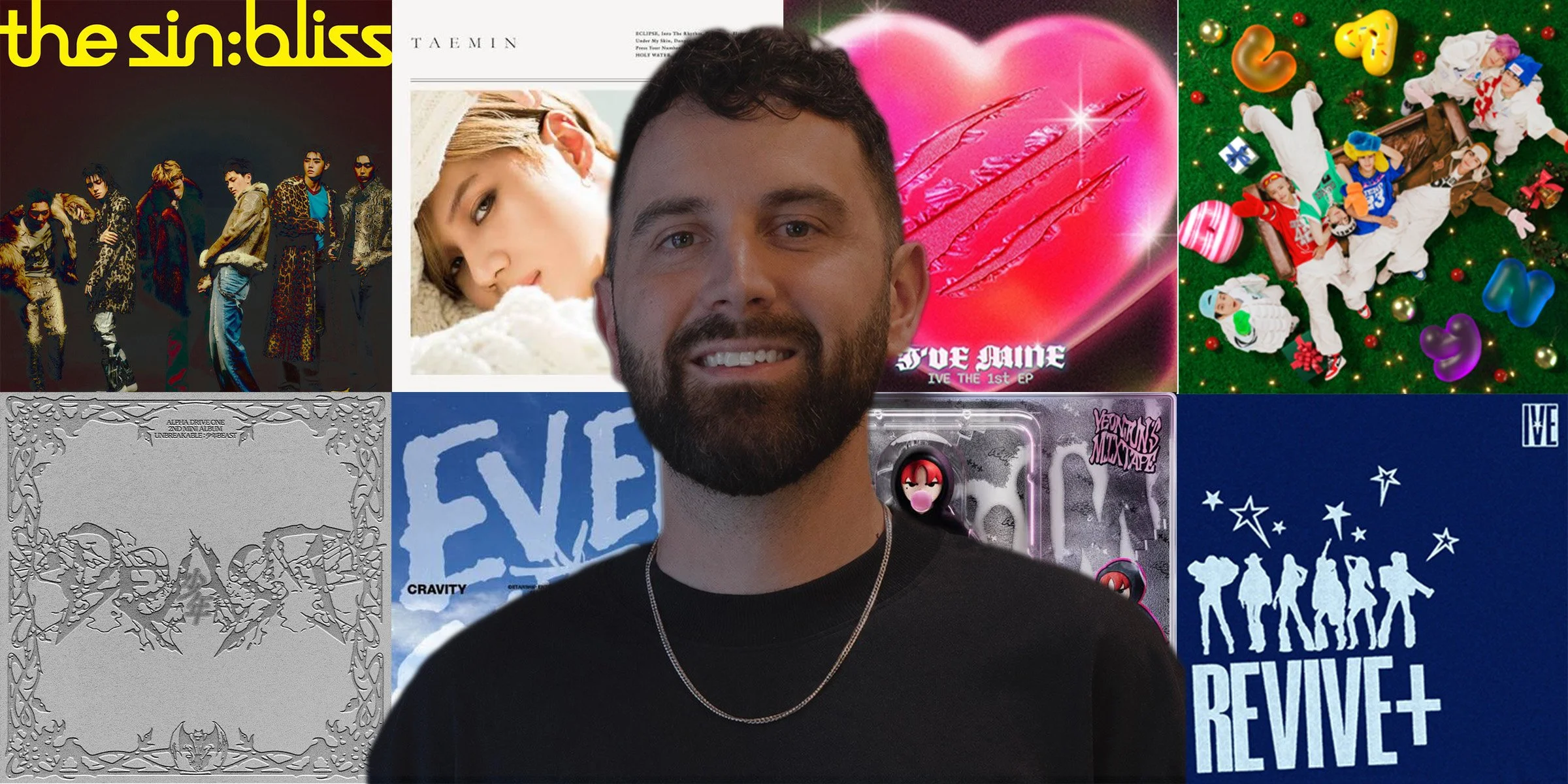
Ryan Curtis has been working in the music industry for nearly two decades, but the multi-platinum, award-winning songwriter still sees room to grow and experiment. Having worked with artists all around the world, his portfolio also includes K-Pop songs from acts such as NCT, IVE, and ENHYPEN. He recently achieved his first No. 1 record on the Billboard 200 chart with ENHYPEN’s THE SIN : BLISS, which includes title track “Bloody Paradise” and the B-side “Stuck,” two songs he co-wrote. In midst of his busy schedule, Ryan Curtis took the time to speak with The Kraze about his passion for music, evolution as a songwriter, and future goals.
Q: How did you begin your songwriting career, and how did you begin creating songs for K-Pop artists?
A: My songwriting career really started in Scotland around 2007, when I got my first MacBook Pro and started messing around with GarageBand. I completely fell in love with the process. My parents were also involved in the music industry in Scotland, so their advice helped point me in the right direction early on.
From there, I started going to London, then eventually caught the LA bug. Once I came to Los Angeles and found my people, things really started moving. I always tell new writers how important it is to travel, meet people, and actually live a little. All of that eventually finds its way into your songs.
My first K-Pop release was TAEMIN’s “Under My Skin” in 2018, which I still love. I had some releases in China after that, focused more on the U.S. for a while, then accidentally found my way back into K-Pop. Once songs with NCT Dream and ENHYPEN started happening, it just snowballed from there.
Q: Take us back to that experience working on TAEMIN’s “Under My Skin.” What was that like for you, and did it come with any sort of learning curve that felt different from working with Western artists?
A: Seeing the music video, the fan reaction, and the articles around it was such a cool introduction to that world.
Honestly, I try not to think too much about whether I’m writing for K-Pop, Western pop, or any particular market. Most of my biggest successes have come from simply making something I genuinely love rather than trying to manufacture something for a specific audience.
That’s one of my favorite things about songwriting. Maybe a song finds a home tomorrow, maybe it takes two years, maybe it never does. If I loved making it, the process was still worthwhile.
Q: What is one lesson that you learned from early in your career that still informs how you work in the present?
A: One of the biggest things I learned is that you don’t always have to be in the driver’s seat in a session. Sometimes you’re driving, sometimes you’re the passenger, and sometimes you’re basically pushing the car. Your role changes depending on the song and the people in the room.
Early on, I’d sometimes leave thinking, “I only contributed that one part, did I really do enough?” Eventually I realized that even the ideas that don’t make the song can lead somebody else toward the idea that does. Now I’m only thinking about whatever gets the song from A to Z in the best possible way. Learning not to overthink my contribution made songwriting a lot healthier mentally.
Q: What is your process for crafting melodies, and does it differ depending on if you’re writing for a K-Pop girl group or a boy group?
A: My process is pretty simple: get on the mic as quickly as possible.
I love being sent a track with a strong structure because I can usually decipher the feeling of the song really quickly. I’ll start recording melodies almost immediately, get all the instinctive ideas out, then fine-tune afterward.
I don’t dramatically change that approach between girl groups and boy groups. Range might influence certain choices, but creatively I prefer to stay free. There’s something special about capturing whatever naturally comes out when you first hear a track.
Q: When you are given an assignment to create a song, what percentage of those projects are made with a specific artist in mind, as opposed to a general song idea that gets assigned to an artist later?
A: Very few of my placements actually start with a specific artist in mind. Most of the time I’m just making a song that I love and letting it find its home afterward.
Two recent exceptions were IVE’s “Payback” and ENHYPEN’s “Bloody Paradise.” “Bloody Paradise” was especially intentional. JULiA LEWiS and I got together at the beginning of the year and literally said we wanted to make ENHYPEN’s next single.
We’d known each other for years but hadn’t worked together in a long time. We reconnected, made “Bloody Paradise” and “Stuck,” and both ended up with ENHYPEN. Actually calling the shot like that and having it work out is pretty rare, so that one was especially satisfying.
Q: Let’s dive more into your work on “Bloody Paradise.” What was the idea behind the track, and how did it evolve in the songwriting process?
A: With “Bloody Paradise,” we wanted to give ENHYPEN something different. The production had Latin and Brazilian influences, and melodically we wanted it to feel immediate, catchy and easy to latch onto.
We had most of the verse and pre-chorus within the first five minutes of recording melodies over the track. The chorus took a little more work between all of us, but I love where it landed. Seeing the fan reaction now has made the whole process even better.
Q: Since you have worked with ENHYPEN a few times previously—on DARK BLOOD’s “Bills,” ORANGE BLOOD’s “Orange Flower (You Complete Me),” and “Home”—has the way you approach songwriting for them changed at all?
A: My process with ENHYPEN honestly hasn’t changed much. I make something I love and hope that they love it too. It really is that simple.
I don’t like overthinking things like exact range or trying to force something to sound like “an XYZ song.” Sometimes songs have their own plan, and you have to leave enough space for them to become what they’re supposed to become.
Q: You also worked on the songwriting for ALPHA DRIVE ONE’s “OMG!” on their new EP, UNBREAKABLE : 少年BEAST. As this was the first time you worked with them, how did you approach this project?
A: The approach wasn’t dramatically different. I wrote that one with my friend Benjamin [Shapiro], who’s an amazing songwriter, and we did it together in person at his studio, which was a little different because I do a lot of writing from my own studio these days. Other than that, it was the same philosophy: everyone throws ideas into the room, you keep the strongest pieces, and eventually you solve the puzzle.
Q: Which K-Pop artists would you like to work with in the future?
A: I’m really open. I’d love to do something with Stray Kids, CORTIS, TXT (Tomorrow x Together).
A big goal for me is getting an IVE single. I know their team really well, love how they work and what they stand for, so I’d definitely love to get that one locked in at some point.
Q: What advice would you have for songwriters looking to work in the K-Pop market?
A: The theme of this whole interview is probably: don’t overthink it. It’s just a song. You can write another one tomorrow.
The biggest thing is to collaborate, network, and find your people. If you can spend time in a major music city, I think that’s incredibly valuable. Online collaboration is great, but there’s still something different about being around other writers and producers and growing together.
A lot of new writers want to immediately work with the biggest producer in the room, but many successful people came up alongside the same collaborators for years. Find your circle and build together.
Music can also take a long time. You definitely can’t make it if you stop. Talent matters, but so do hard work, relationships, and simply staying in the game long enough for things to connect.
The Kraze thanks Ryan Curtis for his time and ON RECORD for making this interview possible. He can be found on X and Instagram under the handle @ryancurtis. For a more comprehensive list of his work, check out this Spotify playlist.