
The Origins of Trot Music
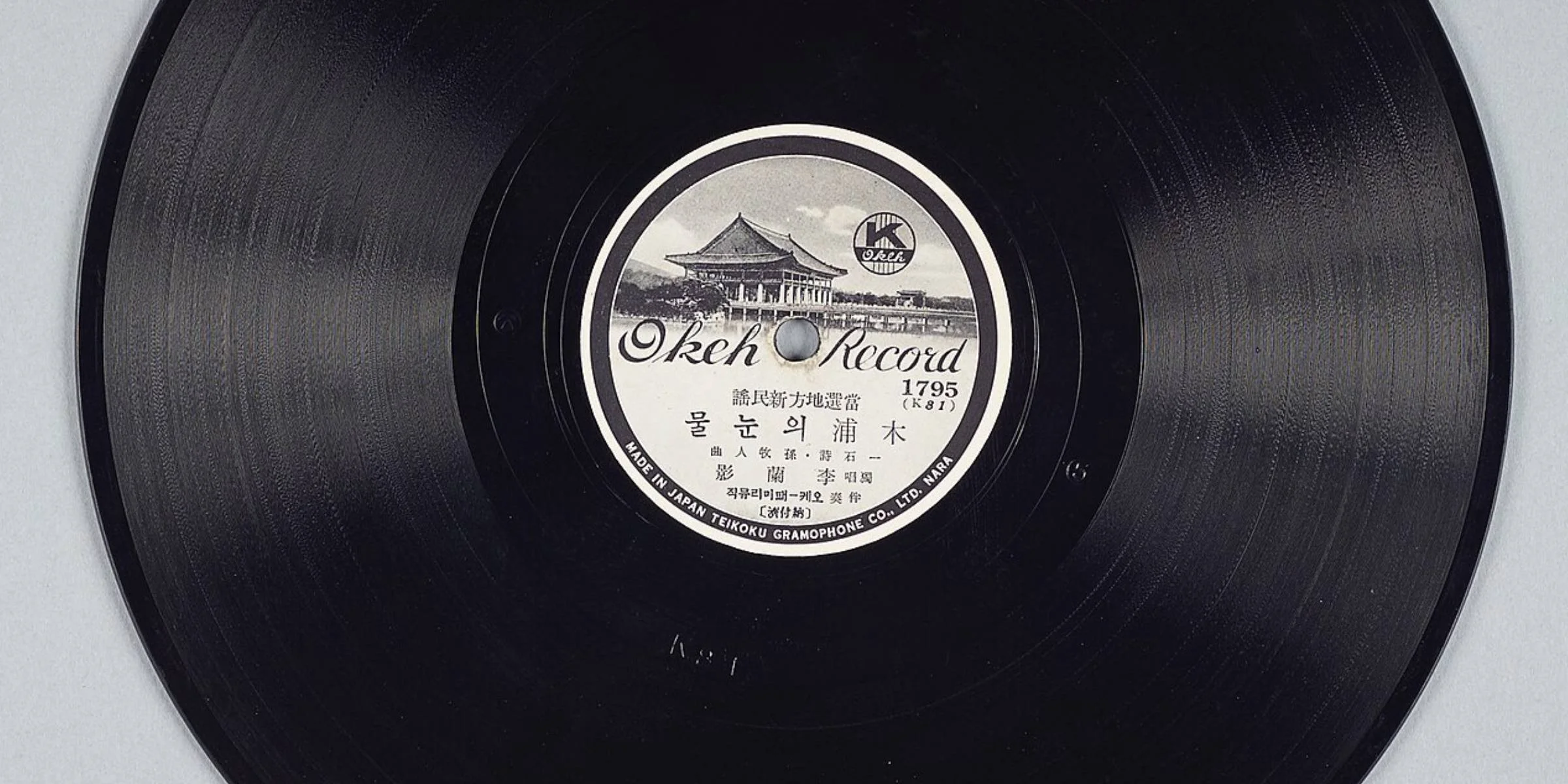
Record of the “Tears of Mokpo”; Korean Government Open License Type I
Trot, a two-beat folk music genre, and Korea’s first popular music genre, offers an ethnographic lens on the Korean peninsula over the course of the 20th century and beyond. Still prominent across the Korean music scene to this day, trot as a genre first emerged under Japanese occupation in the 1920s and '30s.
Musically, trot, especially early trot, typically follows the minor pentatonic scale. A solo singer or duet, with typically orchestral or band instrumentation, delivers vibrato-heavy vocals that flex and bend on higher melodies.
At the core of trot music is “Han,” a distinctly Korean sensibility often referred to as untranslatable. “Han” is a blend of injustice, resentment, and melancholy stemming from the knowledge that Koreans, and Korea as a whole, experienced being both deeply wronged and the lingering injustice, unresolved, across the 20th century. This profoundly Korean melancholy, han, is characteristic of both trot and other Korean folk genres, like pansori (traditional, percussive musical storytelling). The term trot is derived from the American genre “foxtrot,” a popular dance genre of the 1930s, although the two musical genres do not hold much in common besides their shared terminology and a two-beat meter.
Lee Nanyoung’s “Tears of Mokpo,” a hit 1930s trot song considered representative of the genre, captures han acutely in its lyrics:
“Are these the tears of farewell? The sorrow of Mokpo?
Underneath Nojeok Peak, we hold three hundred years of enmity.
Here, I clearly feel traces of you—a sorrowful devotion.”
Han is evident in every line of “Tears of Mokpo.” The record company that published the song was called into question by the Japanese Police after the song’s popularity because of its depiction of “enmity,” suspected to be a means of conveying anti-Japanese sentiment. Arguing that the term was mistranslated to enmity, and rather referred to ducks under Nojeok Peak, the record company managed to evade further run-ins with the law. And while this justification spared them, the composer would later admit in his autobiography that enmity remained, in fact, the true lyrical translation. The song would later go on to be considered a national song of Korea, and Lee Nanyoung was elevated to the status of “national singer.”
It’s from this environment that trot emerged, and Trot’s decolonial origins continue to be disputed. Originally seen as a foreign music genre, trot is commonly accepted as a Korean take on enka, a Japanese folk genre with similar vocal ornamentation and ballad-esque sorrowful instrumentation. And yet, the originator of enka, Koga Masao, credits Korean folk music as an inspiration for enka, having spent some of his childhood in Korea prior to inventing the genre. This has resulted in decolonial historiographic criticisms of this origin story arguing that trot is more Korean than originally given credit for, that trot and enka are intertwined, in what is called the “ppongjjak” (ppongjjak, somewhat derogatory term for the genre). It was only in the 1950s and 1960s, after the end of Japanese occupation and the Korean War and only after immense cultural debate, that trot was more widely accepted as a traditionalized Korean genre. Be it from enka or folk music, trot blended the folk approach with the two-beat meter and rhythm of American foxtrot and jazz, and paired it with that ever-present han.
As Korea approaches a century of trot, time will tell if its eminence can continue. And yet, in the decades since, its popularity in Korea has ebbed as much as it has flowed: after winning television competition series Mr. Trot in 2020, Lim Youngwoong continues to dominate Korean music charts across all genres, surpassing 13.5 Billion streams on MelOn this year. The genre, both a century-old anti-colonial pop music mechanism and a conduit of Korean identity, continues to evolve for a 21st century South Korea.