
The Context Behind the K-Pop Artists Nominated for the 2027 Grammys
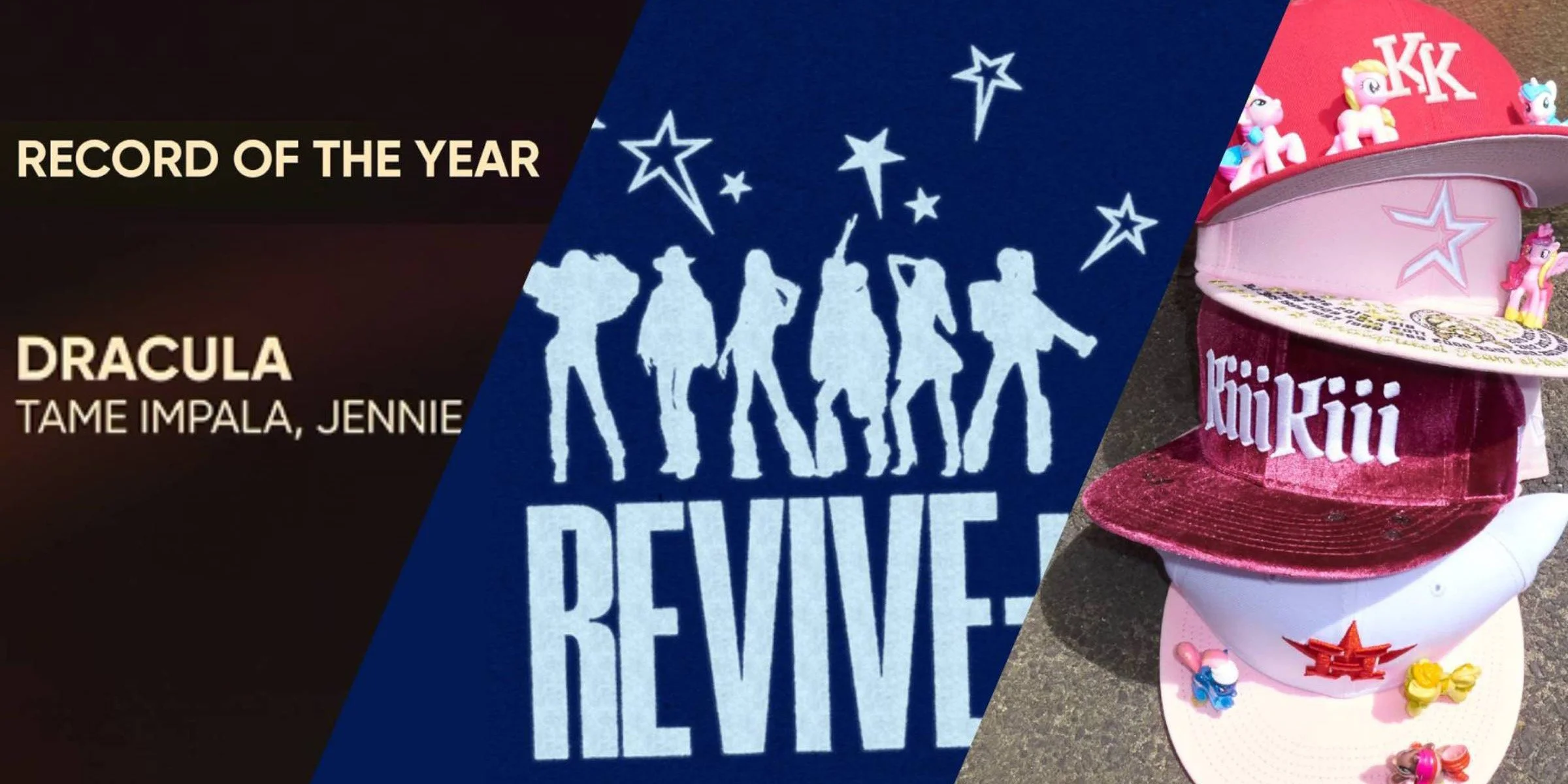
Amid controversy over the Grammys’s new “Best Asian Pop Music Performance” category for 2027, the Recording Academy announced the nominees last week. Starship Entertainment acts IVE and KiiiKiii became the first-ever K-Pop nominees for “Best Asian Pop Music Performance” for “BANG BANG” and “404 (New Era), respectively, and BLACKPINK’s JENNIE received nominations for “Record of the Year” and “Best Pop Duo/Group Performance” with “Dracula,” for her collaboration with Australian rock band Tame Impala.
The ceremony for the 69th Grammy Awards won’t take place until February 7, 2027, but the discourse will surely remain a hot topic until then. It has renewed conversations about the image and status of Asian music in reference to the broader music industry. Regardless of the mixed reaction towards the “Best Asian Pop Music Performance,” history will be made one way or another.
“Dracula (with JENNIE)”
JENNIE’s collaboration with Tame Impala remixed the band’s 2025 song “Dracula,” off their Deadbeat album. She adds her vocals to this disco-pop fusion track. Released on February 6, 2026, the song became an international hit, elevating the original to greater heights.
According to the 2026 Midyear Report released by data organization Luminate, known for their insights on the entertainment industry, the song placed No. 8 within “Global Top 10 Songs,” among hits from Taylor Swift, Bad Bunny, HUNTR/X, and BTS. Though Tame Impala is the main artist for the song, these nominations are still important for JENNIE. The song faces competition against tracks like Bruno Mars’s “Just Might” and Olivia Rodrigo’s “the cure” for “Record of the Year,” and against Madonna and Sabrina Carpenter’s “Brings Your Love” and Lady Gaga and Doechii’s “RUNWAY” for “Best Pop Duo/Group Performance.”
“BANG BANG” and “404 (New Era)”
IVE and their labelmate KiiiKiii were nominated alongside Filipino acts BINI and SB19 and Japanese acts BABYMETAL (with American rock band Polyphia) and LiSA for “Best Asian Pop Performance.” “BANG BANG” was released on February 23, 2026 as one of two title tracks on IVE’s second full album, REVIVE+. Coming in strong as an aggressive EDM song with Old West-influences, the track achieved a Perfect All-Kill (PAK), meaning it simultaneously ranked No. 1 across “all music charts in Korea.” “BANG BANG” also recently received “Song of the Year” at the 2026 MelOn Music Awards.
“404 (New Era)” was released as part of KiiiKiii’s Delulu Pack EP on January 26, 2026. Drawing influences from UK garage and house, the song is all about existing as yourself, no matter the outcome. The song saw success by climbing to the top of the Circle Chart’s Digital Chart by mid-February.
Grammy Nomination Process
The Grammy nomination process undergoes many stages. First of all, next year’s Grammy Awards recognizes songs that were released between August 31, 2025 and August 28, 2026. Representatives must then register their songs for consideration between July 7 and August 21, 2026. The Recording Academy screens each song into categories that best fit them, and then the Academy’s Voting Members decide which songs to nominate. Many K-Pop artists have submitted their songs for the Grammys in the past.
However, HYBE, JYP Entertainment, SM Entertainment, and YG Entertainment decided to forgo submissions this time. Among their rosters, BTS, who has received five Grammy nominations in the past, and Stray Kids have released explicit statements on not submitting their music. The announcements came following the Recording Academy’s reveal of the “Best Asian Pop Music Performance” category in June. “There's so much music coming out of that region, between J-Pop and Mandopop and K-Pop, and I'm so excited to recognize its impact in next year's show,” Grammys CEO Harvey Mason Jr. said in a company interview.
Explaining “Best Asian Pop Music Performance”
The 69th Grammy Awards’s rulebook defines eligible songs for “Best Asian Pop Music Performance” as “contemporary popular music originating from or widely recognized within Asian markets, including K-Pop, J-Pop, and C-Pop.” Additionally, an “Asian language should play a significant role within the song in bilingual or multilingual structures” so that listeners can classify that song within that language. Songs sung in primarily non-Asian languages, such as full-English K-Pop songs, were not eligible for this category.
Though the Recording Academy’s introduction of this category intended to promote inclusion, the decision drew backlash. BTS said in a statement that “we hope our music can be heard and loved for what it is, rather than being divided by region or language.” By sectioning off Asian music into its own separate category, the move was seen as exclusionary by some. Harvey Mason Jr. heard the reaction, and hoped that “Best Asian Pop Music Performance” would still prove beneficial. “By far, the loudest feedback we heard was from people who were enthusiastic supporters of the category, fellow music creators expressing their encouragement for keeping it,” as written in the Hollywood Reporter.
The true results of both the Grammys and the public perception of “Best Asian Pop Music Performance” will come on February 7, 2027. Many K-Pop fans will have their eyes glued to their screens to see what implications this category has on future Grammy Awards. Either way, it will provide entertainment.