
History Spotlight: The Assassination of Empress Myeongseong
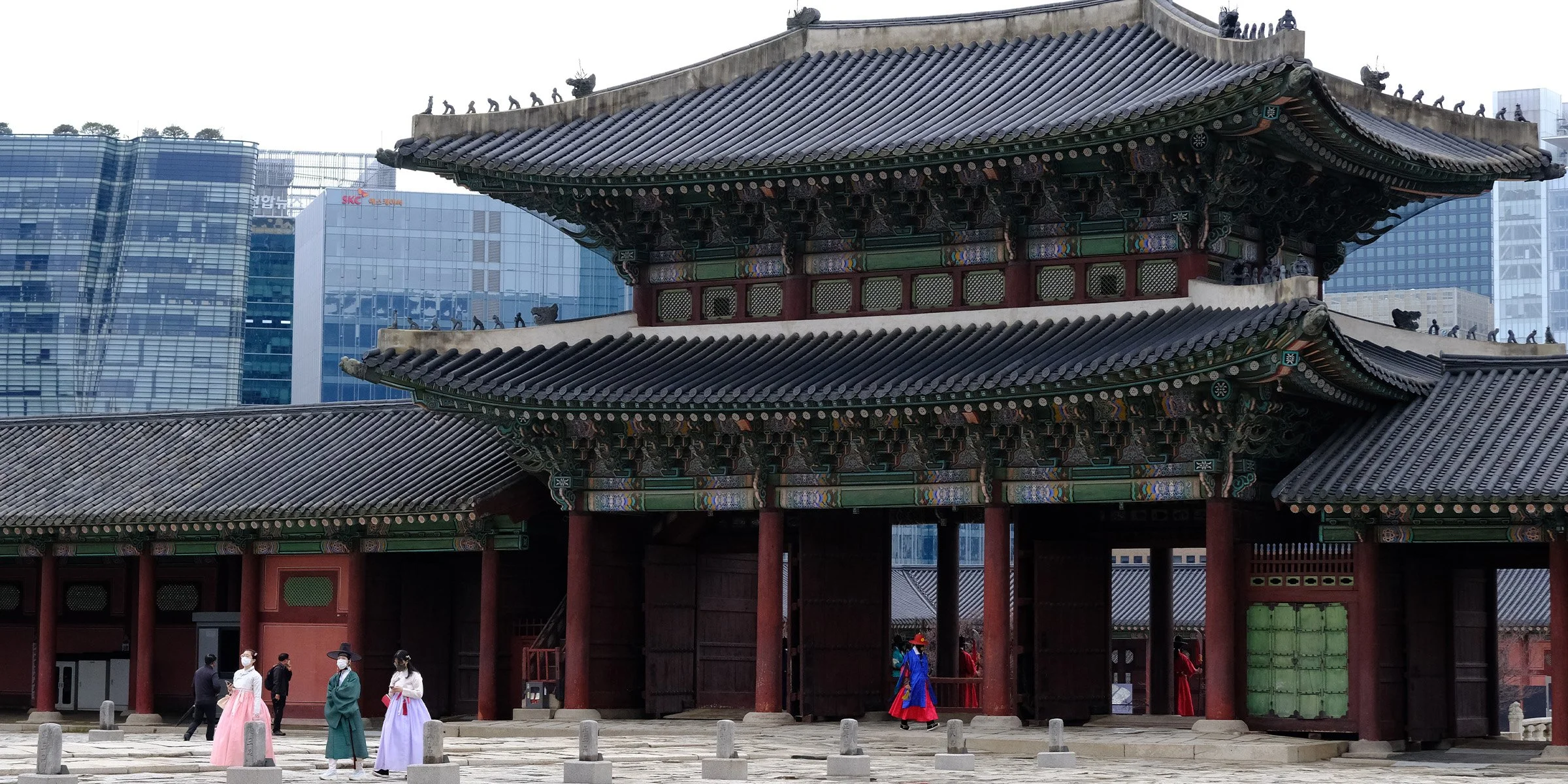
Photo: csk from Pixabay.
In 1895, Queen Min, posthumously named Empress Myeongseong, was assassinated within the walls of Gyeongbokgung Palace in an attack orchestrated by Japanese emissary Miura Gorō and involving what is estimated at more than 50 Japanese collaborators in the raid on the Palace and the assassination. This attack is marked as one of the great turning points between Japan and Joseon, and a significant precursor to the eventual Japanese colonial rule over Korea starting in 1910. In this way, the Empress’s assassination further destabilized Korea to foreign intervention, accelerating the collapse of Joseon.
Evidence about the assassination continues to emerge even to this day, with a diplomat’s letter newly examined as recently as 2021. In subsequent historical records, the assassination emerged as a symbol of both Japanese atrocities in Korea and, as such, is historiographically understood as one of the significant turning points in the end of Joseon.
Korea in the 1890s was marred with both instability and uncertainty. The country was seen as one of the key opportunities for competing global powers in the age of imperialism, where countries competed to assert their colonial dominance across the world as quickly as possible. Russia, Japan, and the United States were all interested in the freshly opened Joseon, which, in the wake of the first Sino-Japanese War and the Donghak Peasant Revolution, faced extensive internal instability. In the wake of these events, Joseon established a wing of their internal military that served Joseon, but was trained and equipped by Japan—the Hullyŏndae. The establishment of the Hullyŏndae caused extensive internal strife within the Joseon military, with many seeing the members as loyal to Japan rather than to Joseon.
During her time as Queen Consort, Empress Myeongseong rose to become one of the most significant figures in Korean history, splitting from traditional Joseon conservatism to deftly navigate the emerging global politics of the late 19th century with the opening of Korea in 1876. As Japan grew into a significant global power, one of Empress Myeongseong’s key foreign policy objectives became mitigating their encroachment into Joseon, in part by allying the country closer to the West and pursuing diplomatic ties with Russia rather than Japan. In these efforts, she sought to dissolve the Hullyŏndae and remove pro-Japanese officials from the Joseon Court. It was these efforts that sparked the conspiracy efforts to assassinate her.
On October 8, 1895, members of the Hullyŏndae and other Japanese militants, under the leadership of head conspirator Miura Gorō (the freshly appointed Japanese emissary) broke into Gyeongbokgung Palace, climbing the walls and opening the gates from inside. Once inside, they began to search for the queen, beating those they found for information about her whereabouts. When they arrived at the Ladies Chambers, the assassins selected someone they believed to be the queen and threw her to the floor before slashing her to death with a sword, although some details conflict regarding the location of the assassination. Two additional women suspected to potentially be the Queen were killed. The assassins then brought in those close to her to examine the body and confirm her identity. Once they determined that they had, indeed, murdered the Queen, her body was taken outside of the palace walls and burned, likely to dispose of evidence.
All of the Japanese emissaries involved were swiftly recalled to Japan, where they were then arrested on murder charges. However, the Japanese Court, despite acknowledging that the defendants had conspired to commit murder, acquitted them on all charges.
In the wake of the assassination, King Gojong fled to the Russia legation to seek diplomatic protection, living in the Russian Embassy in Seoul for a year. Anti-Japanese sentiment exploded across the Korean Peninsula. Upon his return from asylum, Gojong formally established the Korean Empire, with himself as Emperor, marking a formal end to centuries of Joseon rule.
Several debates continue to the present regarding the assassination. Mainly, historians are in conflict regarding the degree and extent with which the Japanese government was involved in the assassination, if at all, or if it was restricted to the pro-Japan factions of the Joseon Court with the emissary’s involvement. This is exacerbated by the acquittal of all conspirators. Secondly, speculation continues regarding several details around the assassination, including the identification of the body and the location of the assassination.
These debates, alongside similar historiographic strifes between the two countries in the wake of Japanese imperial atrocities against Korea, continue to exacerbate contemporary foreign policy and relationships between the two countries. In this way, the assassination is often seen as one of the earliest historical signals of the atrocities and struggles Korea would face as it entered the 20th century, culminating into a violent and grueling period of Japanese imperial rule.