
Korean Embroidery: 2,000 Years of Needlework Crafting
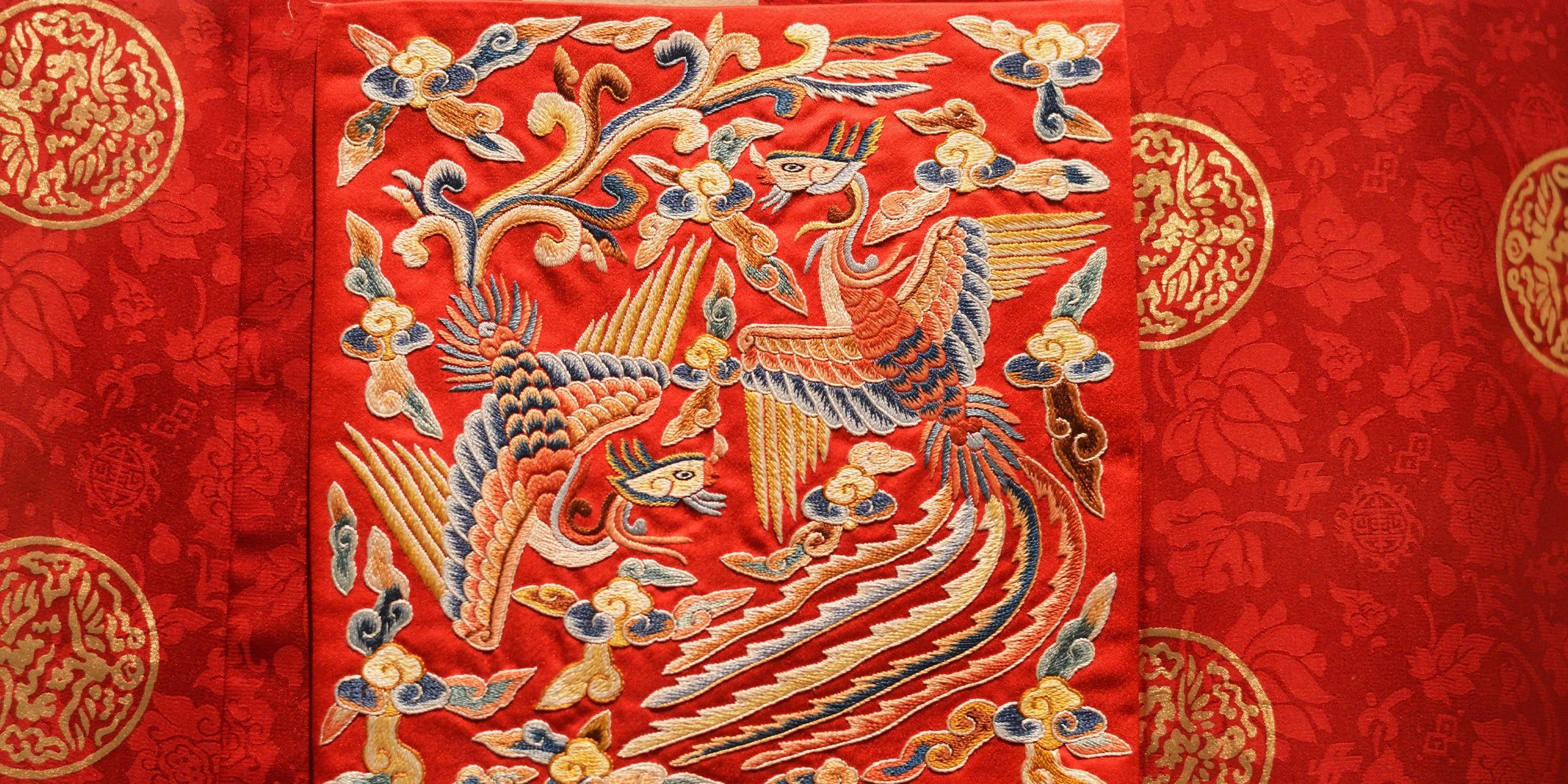
Chasu, or traditional Korean embroidery, holds thousands of years of Korean history in its stitching. The practice uses silk threads to stitch designs onto everything from hanbok and court insignias to pillows and glasses cases. While Bronze Age embroidery in leaves and animal skin existed, the current form of what is today considered chasu took its initial shape during the Goryeo period, with its earliest forms emerging in 900 CE.
Across the Joseon period, Korean embroidery emerged in two distinct forms: gungsu and minsu. Gungsu refers to court embroidery, which used gold thread in the palace-wear of the Joseon court. Gungsu followed strict rules, with the court women who created the embroidered gungsu pieces requiring formal training and specialized techniques as artisans. This embroidery was used for court insignias, royal attire, and involved incorporating symbols depending on the rank of the garment-wearer. The Queen’s hanbok, for example, featured a phoenix, the symbol of authority, while military officials wore hanbok stitched with four-legged animals. Minsu refers to folk embroidery, created outside of the formal rules and constraints of the Joseon court, but still produced throughout Joseon by Joseon women. Minsu was seen as a domestic skill, rather than one requiring formal artisanal training, with the designs fluctuating from family to family and region to region.
Today’s scholars find that minsu often served both a social and creative outlet for Joseon women despite the strict social structures that afforded them little opportunities for artistic expression. Joseon women, for example, were prohibited from participating in outside activities in accordance with neo-Confucian principles. They could not visit temples, participate in outdoor feasts or games, or ride on horseback. If they did, they would be subject to 100 lashings and physical confinement. In this way, embroidery was considered an appropriate activity and outlet for women, who otherwise faced restrictions in expression and social mobility. Embroidery was also a way to imbue beauty and fortune into ordinary objects. Clothes were stitched with symbols for long life, and norigae, charms worn on the waist, would be embroidered with symbols for good luck and fortune. By the late 19th century, embroidery was seen as a quintessential part of education for Korean women, although not long after traditional Korean techniques became prohibited under Japanese imperial oppression, only formally returning as a heritage practice in the post-war era.
Traditional Korean embroidery was heavily symbolic, relying on Confucian and Taoist principles alongside Korean folk imagery to make statements about the garment and the garment-wearer. Designs were often in pairs, to reflect principles of yin and yang.
Typically, the base cloth was affixed to a wooden frame to pull it taut before stitches were placed often with silk thread, although sometimes for royal garments or wedding attire, gold and silver thread were also used. Once the design was completed, the cloth was dusted and a thin layer of paste was placed along the backing to affix the stitches, before being placed to dry.
Today, despite the emergence of machine embroidery, Korean embroidery persists, with the Korean government incentivizing and honoring traditional craftspeople and artisans since the 1970s. Contemporary embroidery artists like Heehwa Jo work to keep the practice alive, studying historical embroidery pieces and infusing her own interpretations into her pieces. The National Museum of Korean Embroidery in Apgujeong hosts rotating and permanent exhibits of Korean craftsmanship and embroidery. In this way, while the demands of modern society have constricted the widespread reach of Korean embroidery, the artistic practice remains very much alive, as a protected and tangible piece of Korean heritage.