Tank Day: The Gwangju Massacre and South Korea’s 2026 Nationwide Starbucks Boycott
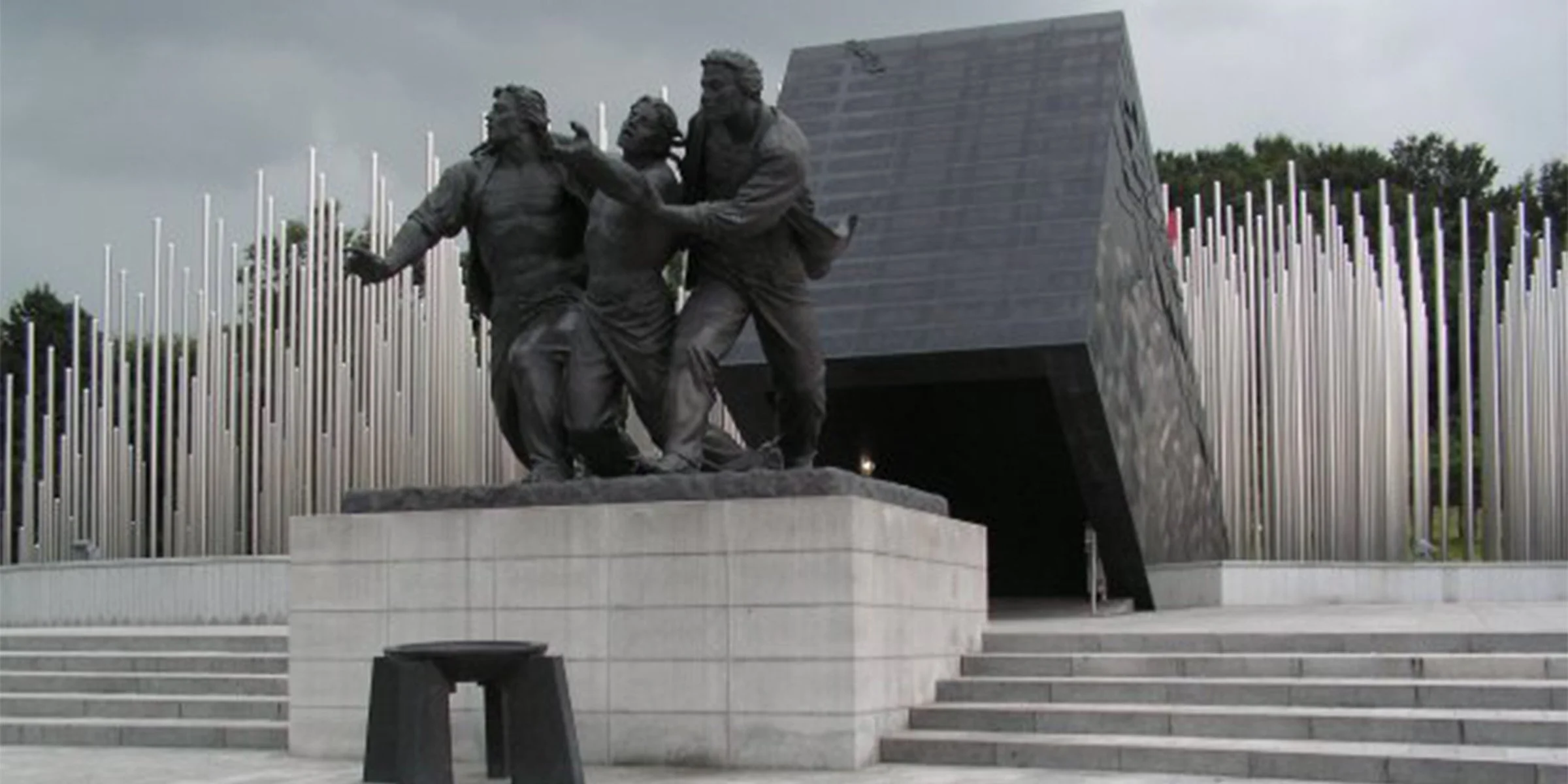
Photo: CC BY-SA 4.0, https://commons.wikimedia.org/w/index.php?curid=128453624
A number of days ago, 2,000 Starbucks locations in South Korea closed their storefronts for the day to conduct history sensitivity training, viewing two lectures by history professors from Seoul’s Sungkyunkwan University. This closure marks a first for the chain, and one that resulted in an estimated 2.1 billion won in sales lost.
The reason for the closure? In May 2026, outrage erupted when the ubiquitous coffee chain unveiled its latest marketing scheme: a line of tumblers themed around a discount for Tank Day, commemorated on May 18 in honor of the Gwangju Massacre.
The Gwangju Massacre, or Gwangju Uprising, which occurred 46 years ago on May 18 to 27, 1980, was a democratization movement emerging from a series of student-led demonstrations against the May 17 coup d’etat by Chun Doo-hwan. These demonstrations occurred in direct relation to the pro-democracy “Seoul Spring” movement that pushed for democracy in South Korea from late 1979 to May 1980. After the May 17 coup, Chun Doo-hwan declared martial law, closed Parliament, arrested opposition leaders, and restricted gatherings to no more than three people. Restrictions on the press also limited the ability of correspondents, both domestic and international, to accurately gather details on the political turmoil.
In Gwangju, Chonnam National University students took to the streets on May 18th to protest authoritarianism and martial law declarations. The South Korean soldiers fired upon the protesters, beating, disemboweling, raping, and torturing the civilians in an act of historical atrocity that was long suppressed in the years since. The soldiers charged the crowds with bayonets, fired indiscriminately, tortured and interrogated, and, in some instances, raped captured protesters, many of whom were students and teenagers. While original state-sanctioned estimates count 165 people killed in the massacre, today's scholarship and primary testimonies bring that estimate to as many as 600 to 2,300 casualties. By May 27, the military fully retook Gwangju, categorically suppressing the protests in an act of atrocity that marks a deep scar in Korea's history as its young democracy began to emerge during the democratic reforms of 1987 Korea’s young democracy began to emerge in 1987 during an era of democratic reform.
The Starbucks marketing campaign offered a “Tank Day” discount and co-opted Massacre’s “twack” phrase, mimicking the sound of hitting the desk, but, in this context. In this context, “thwack” refers to the death of student activist Park Jong-chul, who died of asphyxiation while being water tortured in interrogation. However, in the wake of his death, authorities claimed that the cause of death was shock from the interrogator hitting the desk with a “thwack.” Park Jong Chul’s death, and the publicity around his torture, would later spark protests in 1987 that aided in South Korea’s democratic reforms movement, forcing Chun Doo Hwan’s government to admit to military torture and brutality against civilians and opposition protestors. In 1997, the Korean government formally established May 18 as a national day of remembrance of the victims and the Massacre. And, unlike other Korean democratic movements, the Gwangju Massacre continues to be a political, partisan flashpoint in contemporary Korean politics.
Starbucks’ marketing campaign, therefore, offers a glib take on one of the darkest moments in recent Korean history, taking state-led torture against South Korean civilians, many of whom survive to this day, and coopting it for coffee sales. Shinsegae Group, the conglomerate owner of Korean Starbucks, acknowledged the decision, stating that the promotion was determined after the Starbucks marketing team consulted an AI tool for promotional ideas. Within hours of launch, Starbucks pulled the campaign and fired the CEO, but widespread boycotts of the brand in the wake of this decision continued across South Korea, continuing all the way to the June 22nd store closures.
The May 18 Foundation, which represents Gwangju victims, wrote to Starbucks’ US and overall headquarters, demanding an apology, which they received on June 7th from the Seattle headquarters. The Foundation also contacted Starbucks Korea shareholders, including the National Pension Service, to consider taking action against the company. On June 15th, South Korean police stated that they had opened an investigation into Starbucks and its executives after complaints from victims and families of victims, under the 2021-amended Special Act on the May 18 Democratic Uprising, Article 8 of which makes it illegal to spread false claims regarding the Gwangju Uprising.